


-1761147112036.png)


THE REVELATION
"A secret heir" of Raffaella Carrà? What is (really) in the documents and what is not
An international dispute over the musical "Ballo ballo" reignites the spotlight on the diva's legacy: the name of Gian Luca Pelloni Bulzoni appears in the documents as "adopted son" and "sole heir." But amid courtrooms, rights, and stages, many questions remain unanswered.


Raffaella Carrà had "a secret adopted son" who is therefore also "the only legitimate heir of the fortune of the great Italian artist, as well as the rights to her image and the copyright of her works." His name is "Gian Luca Pelloni Bulzoni, born in Ferrara in 1964 but residing in Rome, where he runs Arcoiris Edizioni Musicali, of which he is the owner. Already personal secretary and manager of Raffaella Carrà, he was among the people closest and dearest to her, along with a few others." This was revealed by the website of "Corriere della Sera," emphasizing that "the news emerged completely by chance from a legal dispute with a Spanish company over the theatrical musical 'Ballo ballo,' for which Carrà's son had requested an injunction against the 'realization, distribution, publicity, and representation, in any form and by any means,' due to the absence of his consent."
A surprising discovery, as it contrasts with what has so far been reconstructed by various outlets regarding the showgirl's family - inheritance going to grandchildren Matteo and Federica Pelloni - but which, precisely for this reason, deserves to be told with rigor, distinguishing what is written in court documents from what is actually proven and established.
The essential facts: the dispute and the request for injunction
In a dispute between a Spanish company involved in the production chain of the musical and the Italian party, linked to the theatrical exploitation of Carrà's repertoire, a request for injunction was made to stop the performances of "Ballo ballo." The Tribunal of Rome rejected the request, deeming it devoid of practical effects because the performances had already taken place and no further dates were scheduled. A decision that - regardless of the merits of the dispute - recalls a well-known principle of civil procedure: when there is no current and concrete interest (because the event has already occurred and will not be repeated), provisional protection loses its reason for being.
In this procedural context, the court documents would refer to Gian Luca Pelloni Bulzoni as "adopted son" of Raffaella Carrà and "only heir." This is a passage that immediately shines a light, as it introduces a new and sensitive element: the reconstruction of the hereditary line of the queen of Italian television.
However, caution is advised: the above should be read carefully. Legal documents often reflect the positions of the parties; they do not in themselves equate to a consolidated judicial truth. Furthermore, at the time of writing, there are no official communications issued by the family or by legal representatives of all the parties involved that publicly confirm a change from the narrative thus far known regarding the heirs.
Who is Gian Luca Pelloni Bulzoni
A reserved figure, professionally linked to Carrà, Gian Luca Pelloni Bulzoni appears in various registers related to entertainment and intellectual property. There are trademark applications registered in his name - including a figurative sign reminiscent of the famous bob - filed in product classes typical of the cultural and cosmetics industry, indicating an active management of the image rights and branding associated with Raffaella.
The traces found in public databases and business registers (for example, for the music publisher “Arcoiris Edizioni Musicali”) place Pelloni Bulzoni within the operations of the entertainment and rights sector, consistent with a role as assistant and trustee in the long professional career of the showgirl. These clues do not “prove” the inheritance profile; however, they show a structured presence around the protection and enhancement of the symbolic and creative capital of Carrà.
The musical “Ballo ballo”: what we know, between Spain and Italy
“Ballo ballo” (Spanish title “Bailo Bailo”) originated as a theatrical derivation of the film “Explota Explota”, a musical comedy inspired by the repertoire of Carrà. The production found a natural platform in Madrid: the Spanish capital is a hub of musical theater in Europe, and the connection between Raffaella and Spain is historical, intense, and reciprocal. The show has received nominations and awards at the Premios Teatro Musical and has solidified a path of internationalization, while the Italian dates have been repeatedly announced or scheduled with varying time horizons, a sign of an ambitious and — inevitably — complex production machine.
On the rights front, the supply chain includes Italian and Spanish interlocutors. Already in 2021, the acquisition of the rights for the theatrical adaptation of the film by the Italian side was reported, in a context that involved the Tornasol production company and Italian producers such as Valeria Arzenton (from the Zed Live group). Operations of this type require layered agreements on copyright, image, trademarks, and music: areas where contractual frictions are not uncommon, especially when the show crosses multiple jurisdictions and multiple markets.
The inheritance issue: what is known, what is new, what is uncertain
Until today, the most credible reconstruction regarding the inheritance of Raffaella Carrà - who passed away on July 5, 2021 - has indicated her grandchildren Matteo and Federica Pelloni (children of her brother Renzo, who died in 2001) as the main beneficiaries of the estate, along with bequests of a charitable and familial nature consistent with the artist's personal history. Numerous journalistic reconstructions have reiterated the absence of natural children and the impossibility, during her lifetime, of fulfilling Raffaella's desire for motherhood: a theme she never shied away from, addressing it with her usual frankness.
The emergence of the reference to Gian Luca Pelloni Bulzoni as "adopted son" and "sole heir" - as would result from passages of legal documents in the context of the dispute over the musical - introduces an element of novelty that, at this time, has not yet found public confirmation in official statements, notarial notes, or final rulings.
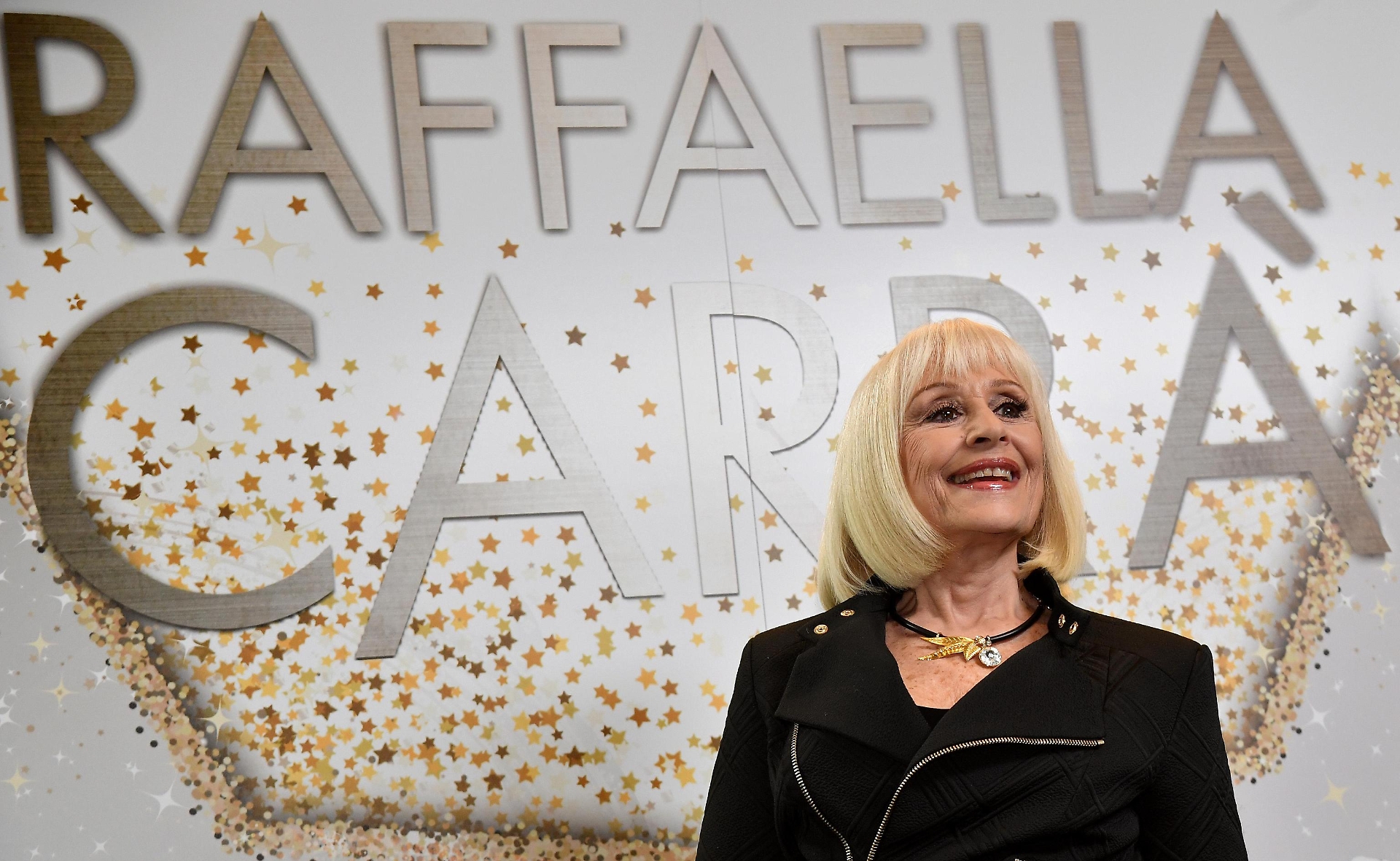
Until further official acts emerge (for example, succession extracts or merit judgments that attest to the status and representative powers over the inheritance), the information should be treated with the utmost caution. Meanwhile, the presence of Pelloni Bulzoni in the management of assets related to the Carrà universe is documented, as shown by the trademark applications and the structures connected to music publishing.
The value (economic and symbolic) at stake
The case brings to the forefront the artistic and industrial dimension of the Carrà heritage: a repertoire of hits that have marked decades of culture — from “Rumore” to “A far l’amore comincia tu,” from “Fiesta” to “Ballo ballo”; an iconic image recognizable globally, which Spain continues to celebrate with musicals that have strong pop appeal; a revenue stream of copyrights, related rights, trademarks, and television formats.
It is not surprising that, around this ecosystem, companies and professionals are moving to protect, produce, export, and — at times — contest claims and attributions. In 2024, for example, the Spanish musical collected awards and nominations at the Premios Teatro Musical in Madrid, confirming the international appeal of the project and the economic interest surrounding the Raffaella brand.