


-1761147112036.png)


the meeting
Catania, the mayor addresses the Cittàinsieme assembly: Corso Martiri, seafront, toll for half-empty cars
Trantino meets with the association and tackles the most delicate issues for the city. The responses did not fully convince the participants, but the mayor still received applause.


A meeting was held in Cittàinsieme - for the first time without the founder Salvatore Resca - featuring a heated discussion with Mayor Enrico Trantino about the state of health of Catania, which has worsened according to Mirko Viola, who introduced and moderated the discussion. Civil coexistence has declined, crime has increased, both the blatant kind involving 90 kilos of cocaine, and the hidden kind of youth violence, the collapse of public function is being recorded, social cohesion is being lost, part of the population is making substantial profits with the mafia, families have become impoverished, and only a few pay taxes.
An alarming picture in front of which the mayor, using the collective 'we' to emphasize the work with the council, states he is aware that it will not be possible to solve all the problems, but assures that he wants to tackle them with the participation of citizens, as with the hundred associations involved in the project of Catania as the capital of culture. But one thing he emphasizes: citizens must also do their part, starting to respect the rules that they are used to interpreting freely according to their own convenience.

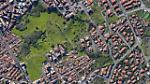
Hundreds of issues raised. And many are the reports and announcements from the mayor. 17 million will come from the Region to repair the pothole-ridden roads (but the entire city would need 400 million), and perhaps another 25 million will be allocated to redo the sidewalks that ensure inclusion for children, the elderly, and the disabled. Trantino claims to have initiated a massive action against illegal activities and to have increased green spaces by creating Piazzale Famà, Piazza Turi Ferro, and soon, Piazza della Repubblica, and to have redeveloped Parco Gioeni and soon also Largo Bordighera. He would gladly purchase the Orti di Cibali, currently for sale for five million, to create urban vineyards, but a municipality in financial distress cannot ask for money for purchases.
If recycling is stuck at a disappointing 37%, it is also due to contracts with companies and the reduced number of managers: 21 compared to 54 in 2005. But he plans to increase it by hiring staff to monitor waste disposal in apartment buildings and with a simplified procedure to recover money from those who, 50%, do not pay the Tari. So far, Municipia has disappointed, as it was supposed to identify tax evaders through those who pay electricity bills.
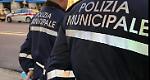
On the mobility front, Enrico Trantino claims that road safety has improved with the new 200 traffic police on the streets, the traffic lights at the ring road, and the speed cameras "that are certified." In April, he will present to the Council and the Municipalities a new mobility plan that will reshape public transport lines to reduce waiting times. He counts on park-and-ride facilities and will check if it is appropriate to build the one planned in Piazza Verga. Additionally, he would like to increase the cost of blue parking zones to encourage those entering the city by car to leave it in park-and-ride facilities or in the free parking area of Piazzale Famà, which is used by very few. To reduce the number of cars, averaging 1.8 people per vehicle, he has planned a tender of 10 million for the use of IT systems to charge an entry fee for cars that are not fully loaded, to promote carpooling.
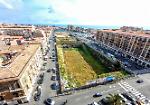
Regarding Urban Planning, the mayor announces that in June he will bring to the city council the preliminary new urban plan, "and it will not be a rigid planning," and that he has requested a special session on Corso dei Martiri to present the idea of the new ownership that has modified the project of architect Cucinella, reducing commercial areas, planning a large structure of 3000 seats for events and the construction of two 5-star hotels. For the Urban Center in San Berillo, the administration is looking for another location and is considering modifying the project that won the redevelopment of the Ognina district in light of the fact that cyclone Harry has shown that it is necessary to renaturalize the waterfront. He reiterates that he does not intend to rotate the director of Urban Planning.
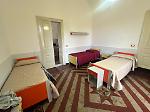
On the topic of social services, the mayor claims, amid protests, that there have been no cuts to specialist assistance for autonomy and communication, that the Plan for the elimination of architectural barriers has been approved, but that 6000 disabled parking permits are too many. He states that the shelters for the homeless "provide 150 places, more than the 140 people counted by the university," and that many of them choose the streets.
He reiterates that migrants cannot be welcomed "if their integration cannot be guaranteed because this means condemning them to marginalization and crime." On the front of the fight against educational poverty and school dropouts, he emphasizes that he has increased nursery school places by 500 and has chosen to invest in schools, starting with the construction of a new Dusmet in San Cristoforo with a gym and services.
Responses that did not satisfy those present, who promised to invite the mayor again, whom they also applauded, to delve into the many open issues.