


-1761147112036.png)


The anniversary
In April, the return to the Moon. But the space (and missile) era began a hundred years ago with the first rocket in the U.S.
The American physicist Robert H. Goddard from Massachusetts initiated one of the many revolutions of the 20th century. The launch of Artemis II by NASA is expected in early April.

Goddard in a 1918 test


In recent hours, NASA announced the return to the Moon in early April, after several delays of the Artemis mission. But this new endeavor, and the missiles that have been prominent in the conflict in the Middle East these weeks, descend from an early prototype that dates back to a hundred years ago. It was on March 16, 1926 when a rocket just over three meters tall and weighing only 4.5 kilograms lifted off for a handful of seconds above a cabbage field in Massachusetts, marking the beginning of the space age. And rocketry. Nell (the name of the invention) was the first liquid-fueled rocket in history. It was created by American physicist Robert H. Goddard, the father of modern rocket propulsion, to whom NASA later dedicated one of its main research centers, the Goddard Space Flight Center in Maryland. Goddard spent several years developing the calculations necessary for the result. And, after the achievement of 1916, he proposed his discovery to the United States Army in the following years: he designed one of the first forms of bazooka.
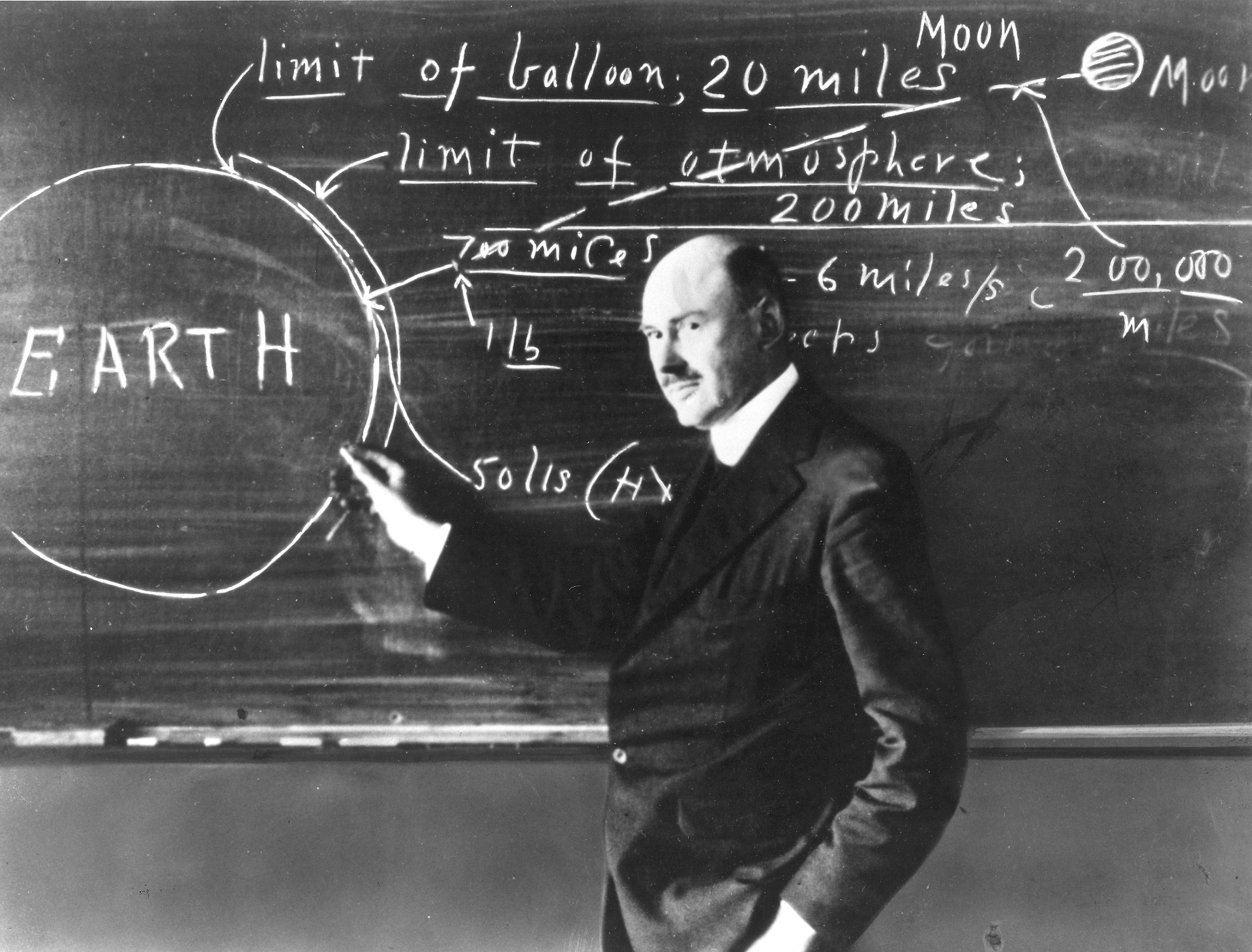
Goddard at Clark University
The test took place on Goddard's family farm in Auburn, in a snowy field. The prototype was powered by a mixture of liquid oxygen and gasoline and remained in flight for just two and a half seconds, reaching an altitude of about 12 meters and landing about fifty meters away. A brief leap, by today's standards, but it demonstrated how the liquid-fueled rocket principle really worked, paving the way for the development of the large launch vehicles that would carry satellites and astronauts into space.
Goddard is nonetheless remembered for his contributions to space exploration, before military uses, to which he also dedicated himself. And a century after Goddard's first launch, NASA's Artemis II mission is preparing to bring astronauts around the Moon for the first time since 1972. The SLS (Space Launch System) rocket that will take them to the Moon is 30 times taller and half a million times heavier than Nell, but it is still powered by liquid fuel, just as Goddard had envisioned and designed a hundred years ago. NASA recently informed that the mission is expected to launch in early April.