


-1761147112036.png)


March 21 and 22
The Spring Days of Fai return and open the hidden treasures of Sicily
Have you ever seen the Cryptoporticus of Villa Bellini? Have you climbed the terraces of Porta Nuova? Have you ever entered the hall of Garibaldi? Palaces, churches, cloisters, gardens to discover all over the Island, many of which are open to the public for the first time


The Fai Spring Days return on Saturday, March 21 and Sunday, March 22, reopening the hidden treasures of Sicily. Palaces, churches, gardens, museums, cloisters, and convents, rock churches. Places of memory, art, history, symbols of our land, some of which can be visited for the first time. Small treasures often forgotten or closed to the public, precious private palaces, populated by caryatids and putti, sumptuous furnishings, and magnificent frescoed ceilings. A long list waiting to be discovered.
The first weekend of spring is dedicated to Italy's cultural and landscape heritage with guided tours in 780 locations scattered across 400 cities throughout Italy with the “Fai Spring Days,” now in their thirty-fourth edition, through which the Italian Environment Fund has helped nearly 13 and a half million Italians rediscover over 17,000 special places in the cities and territories where they live, thanks to Fai volunteers and apprentice tour guides, secondary school students trained to serve as guides.
Many openings in Sicily as well, of often private places that are not usually accessible. In Catania and its province, visitors can explore the Crypt of Villa Bellini, recently reopened, a true surprise in the heart of the city, the Archbishop's Palace, where the halls and terraces can be seen, the former Villa Bonajuto, now the Fineco headquarters, which has always been private and thus inaccessible to the public, and the Palazzo delle Finanze in Piazza Teatro Massimo.
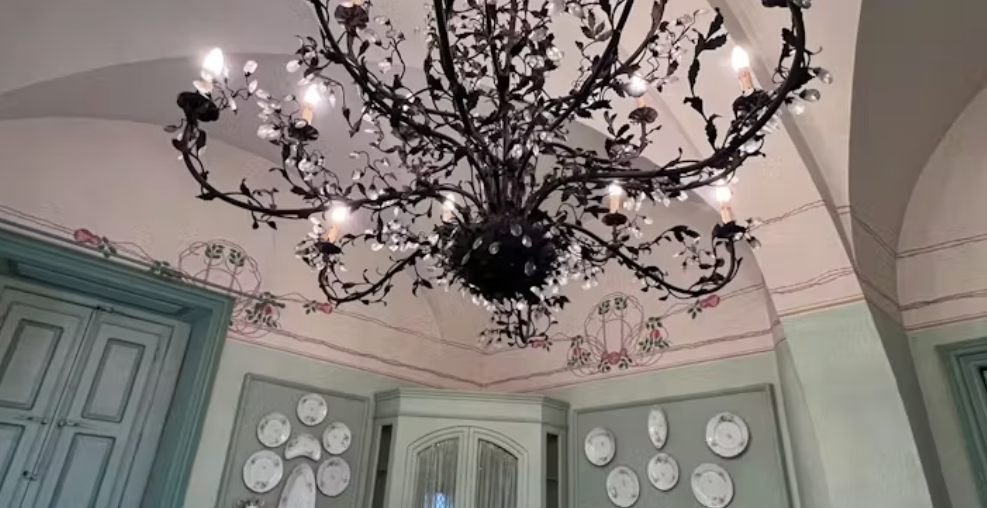
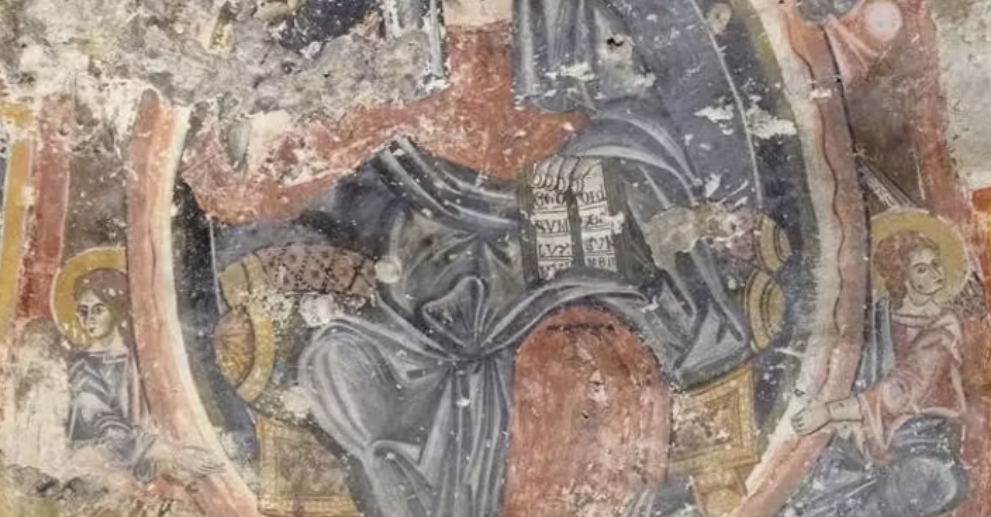
In Acireale, Palazzo Martino Fiorini, with its wonderful Pompeian frescoes, still inhabited by the family, the Bishop's Seminary, the Church of Santa Maria del Suffragio, in Piedimonte Palazzo Voces, a magnificent example of neoclassical architecture, with interiors frescoed by Giuseppe Sciuti depicting mythological scenes and idyllic landscapes, in Giarre Villa Fiamingo (in the photo above), in Misterbianco the Church of Campanarazzu, buried by lava. In Ragusa the Palazzo Arezzo Trifiletti, in Comiso the Castle of Naselli D’Aragona, in Modica the rock church of San Nicolò Inferiore (in the photo below).
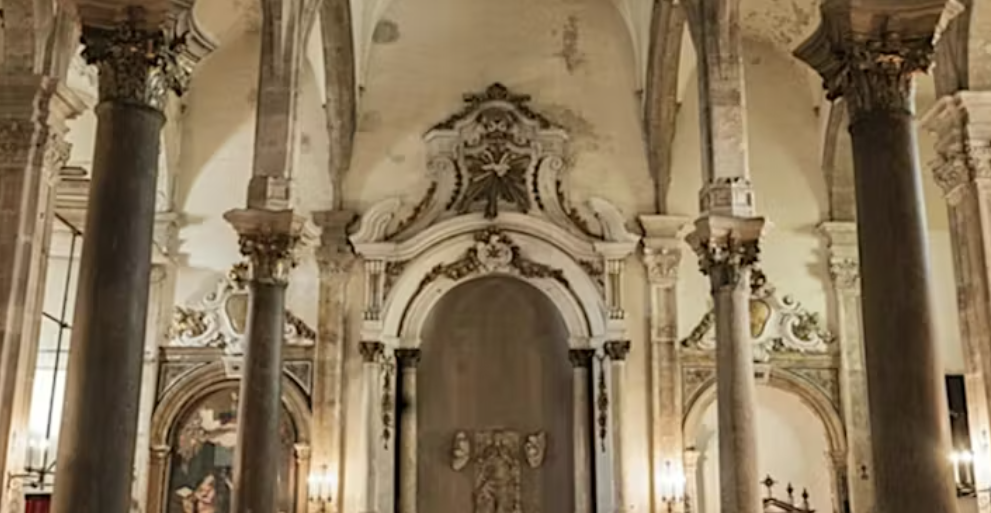
In Palermo, Porta Nuova and the Cavallerizza will be open to the public at the Military Command Army "Sicily," the owner of the site. For the FAI Days, it will be exceptionally possible to access the terraces, from which there is a remarkable view of Palermo, and the Garibaldi Hall, richly decorated and painted, which became the Council Hall when Giuseppe Garibaldi took residence at Porta Nuova in 1860. Additionally, for the first time, the 17th-century wooden structure of the large spire and the terminal lantern will be shown through video images. The tour will continue to Vittoria Alata, the work of Antonio Ugo that was stolen from the Palazzo delle Finanze and then found and restored, concluding at the Real Scuderia of Palazzo dei Normanni. At the Palazzo di Giustizia in Palermo, the Falcone Borsellino museum can be visited, where efforts have been made to recreate the three rooms where the magistrates worked as they were during that period, relocating the furniture and furnishings of the time, recovered not without difficulty, and supplementing them with various personal items that Giovanni and Paolo used during their endless days spent at work. Furthermore, visitors can explore the church of Santa Maria di Portosalvo (in the photo below), the Chapel and loggia of the Incoronata, and Palazzetto Agnello, and in Carini the church and cloister of Santa Caterina.
And, last but not least, one of the most fascinating Benedictine monasteries in Sicily, in Messina, 15 km from the city, on SS 114, on a hill that offers a breathtaking landscape, the Benedictine Monastery of San Placido Calonerò, built in 1361, with two beautiful porticoed cloisters.
The Minister of Culture, Alessandro Giuli, indicated that there are multiple possibilities for enhancing and sharing Italy's cultural heritage, focusing on the meaning of "subsidiarity" in the conservation of cultural assets according to the principle established in Article 118 of the Constitution: "It is a very beautiful term that conveys the idea of integration, of a complement between tools and people, the idea that no one is sufficient unto themselves. There is the idea that the State represents the citizens, but citizens must and can have an active and conscious role" by making their own choices freely. And in this case, Giuli stated, "subsidiarity represents not a relationship of mutual dependence between the Ministry of Culture and the FAI but a mutual love for what makes Italy the nation that holds a primacy" in cultural assets. It is fine then, the minister further stated, quoting Paolo Sorrentino's Oscar-winning film, the "great beauty but it must also be good in the Hellenic sense of the term, where the canon of beauty inspires the essence of goodness." In this sense, "the FAI represents what is beautiful and good in Italy."
The Spring Days, emphasizes the president of the FAI, Marco Magnifico, are "always the result of the passion and spirit of service of our extraordinary volunteers, but I would like them not to be considered as an isolated event because they are truly a megaphone to tell the story of the daily commitment throughout the year in the restoration and enhancement in the management of the assets that belong to the Foundation: there are now 78, and this year we are investing 12 million euros in their restoration, 2 million for ordinary maintenance." The Spring Days are a moment to collect donations (visits are by voluntary contribution) and registrations from "those Italians who allow us to carry out the daily work of maintenance and public opening of the FAI's assets," the president further states. Among them are the Abbey of San Fruttuoso, which was gifted to the FAI by the Doria Pamphili princes, the Castle of Masino, which is a grand royal residence in Piedmont, Villa Necchi Campiglio in the center of Milan, which is now almost a cult destination for those visiting the city, the Bay of Ieranto gifted to the FAI by Italsider, the garden of Kolymbethra in the Valley of the Temples in Agrigento. These are just some of the assets that the FAI owns and preserves, of which 60 are permanently open to the public. Instead, there are hundreds of special places open on March 21 and 22, from north to south of the Peninsula, often little known or underappreciated, many of which are usually inaccessible.
In the photos on the homepage
At the top left, the Benedictine Monastery of San Placido Calonerò in Messina, Palazzo Martino Fiorini in Acireale, the Cryptoporticus of Villa Bellini in Catania. Below: in Palermo, Porta Nuova and the Falcone Borsellino Museum inside the Palace of Justice in Palermo, the Church of S. Maria del Suffragio in Acireale